Travel Mitra
A Custom Web Application built for the internal operations of a travel agency that owns no vehicles. The system brings a scattered network of owners, drivers and bookings into one place where the work can actually be managed.
Video transcript
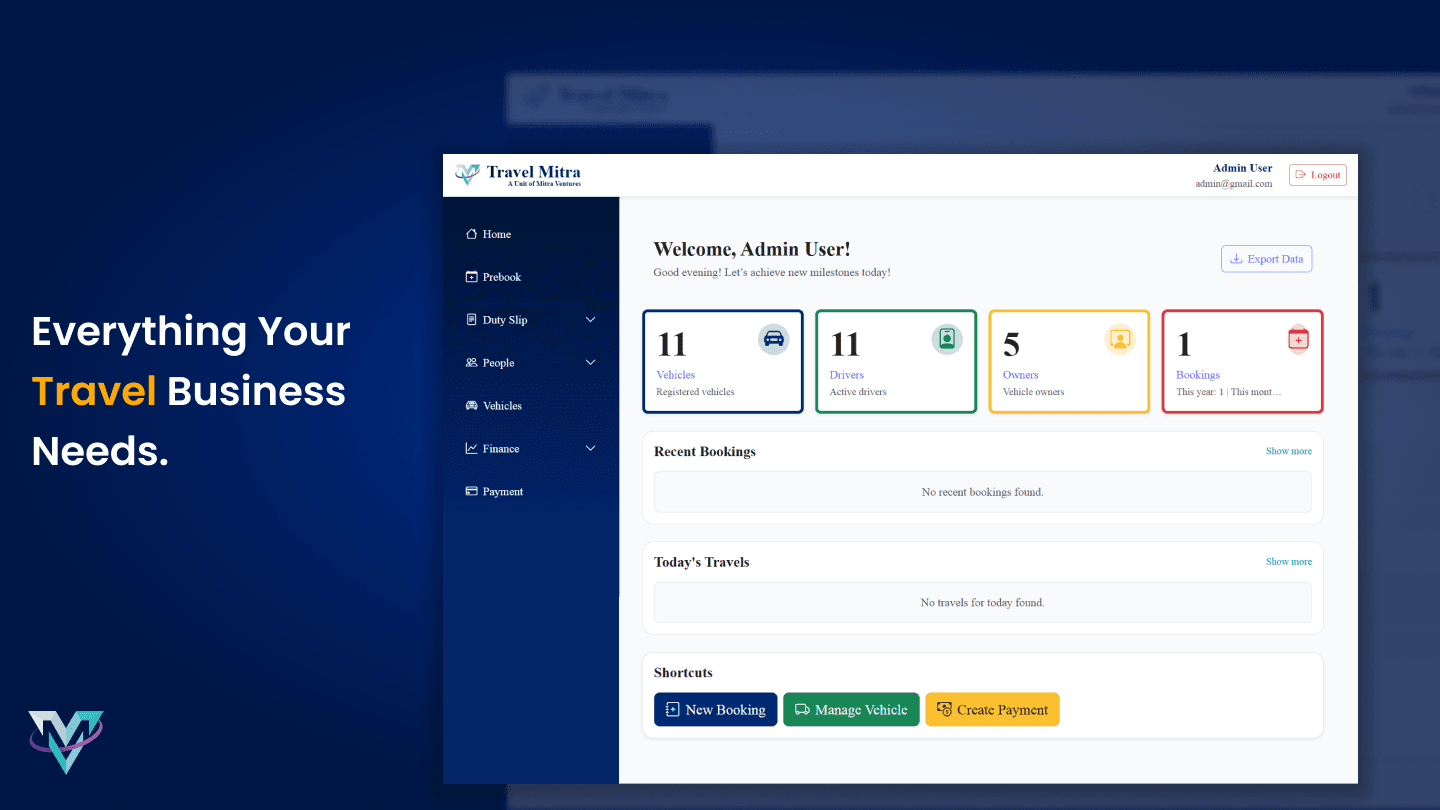
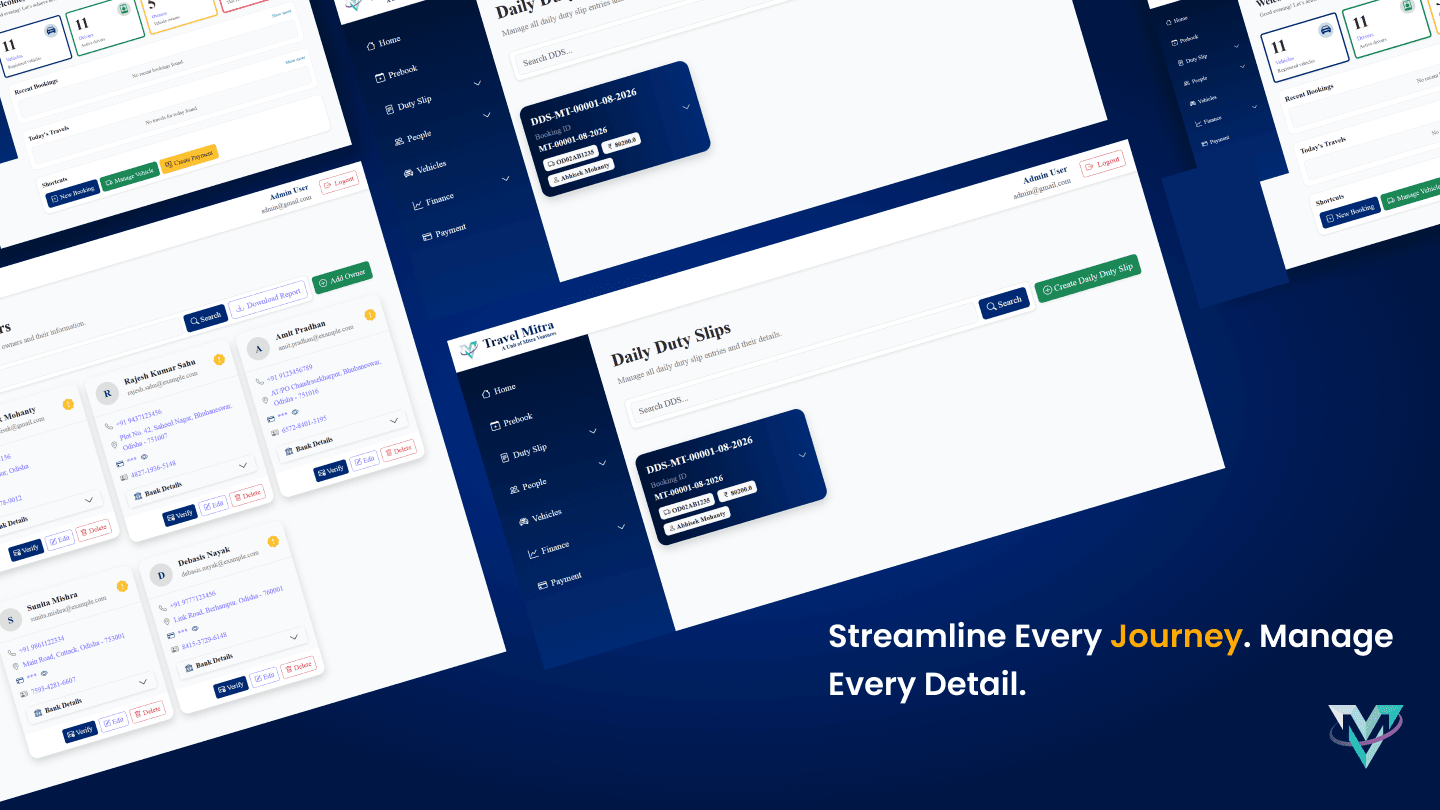
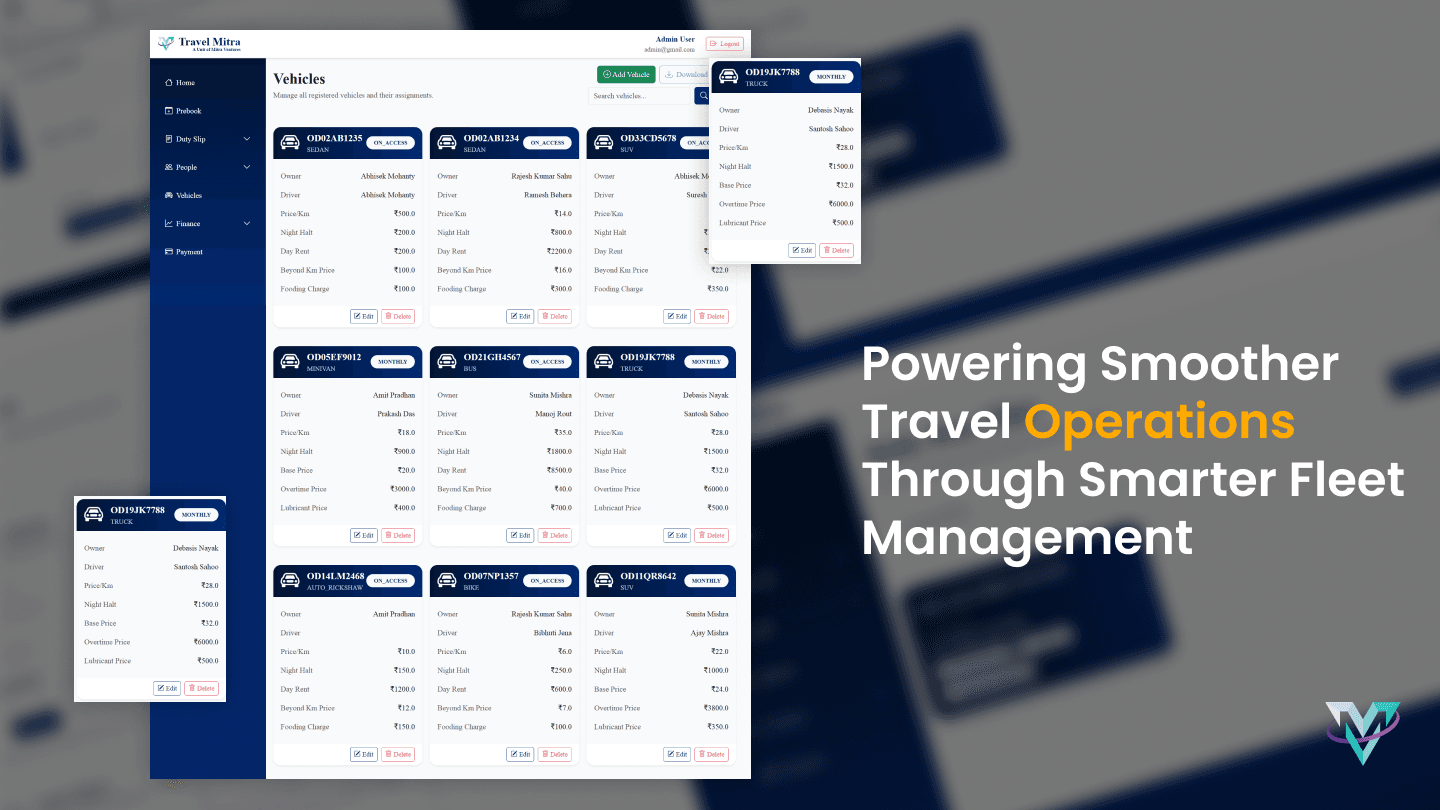
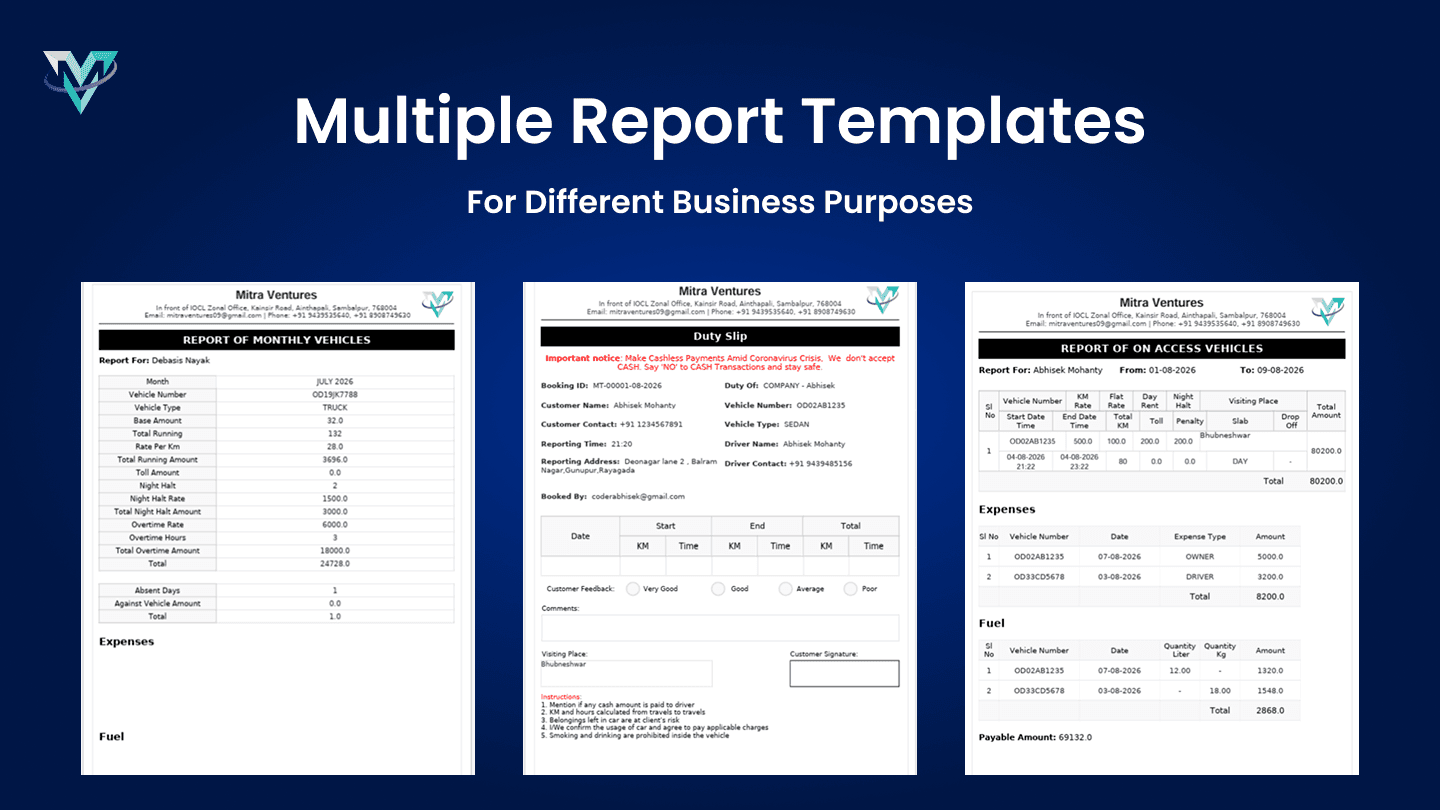
The video opens with a title card introducing the problem of manual paperwork, followed by Travel Mitra branding. The administrative dashboard appears, presenting summary counts for vehicles, drivers, owners, and bookings, along with recent bookings, daily travel activity, and shortcuts for common operations. The walkthrough moves to fleet management, showing registered vehicles and their associated information, including vehicle-specific pricing details. The People menu then introduces records for owners, drivers, employees, and fuel providers. The video continues through pre-booked trips and duty-slip management, showing how scheduled travel and trip-related records are organized within the system. Additional screens demonstrate owner records, fuel expenses, spending information, and payment management. The presentation concludes by showcasing multiple report templates for different business purposes, including monthly vehicle reports, duty slips, and reports covering vehicle usage, expenses, fuel, and payable amounts.
Project Context And Details
FAQs
- Why did Travel Mitra need a custom management system?
- Travel Mitra coordinates trips using vehicles owned by independent vehicle owners rather than maintaining its own fleet. As trip volume grew, vehicle details, driver assignments, pricing, fuel usage, and payment information became harder to coordinate because they were spread across notebooks, spreadsheets, and phone calls. A custom system brought these operational records together in one place.
- How does the system manage vehicles owned by different people?
- Each vehicle has its own record linked to its owner and assigned driver. The system also accommodates individual pricing arrangements, including per-kilometer rates, daily rent, night-halt fees, fuel costs, and other applicable charges. This lets Travel Mitra manage a varied network of independently owned vehicles without imposing one fixed pricing structure.
- How does Travel Mitra organize vehicle owners and their information?
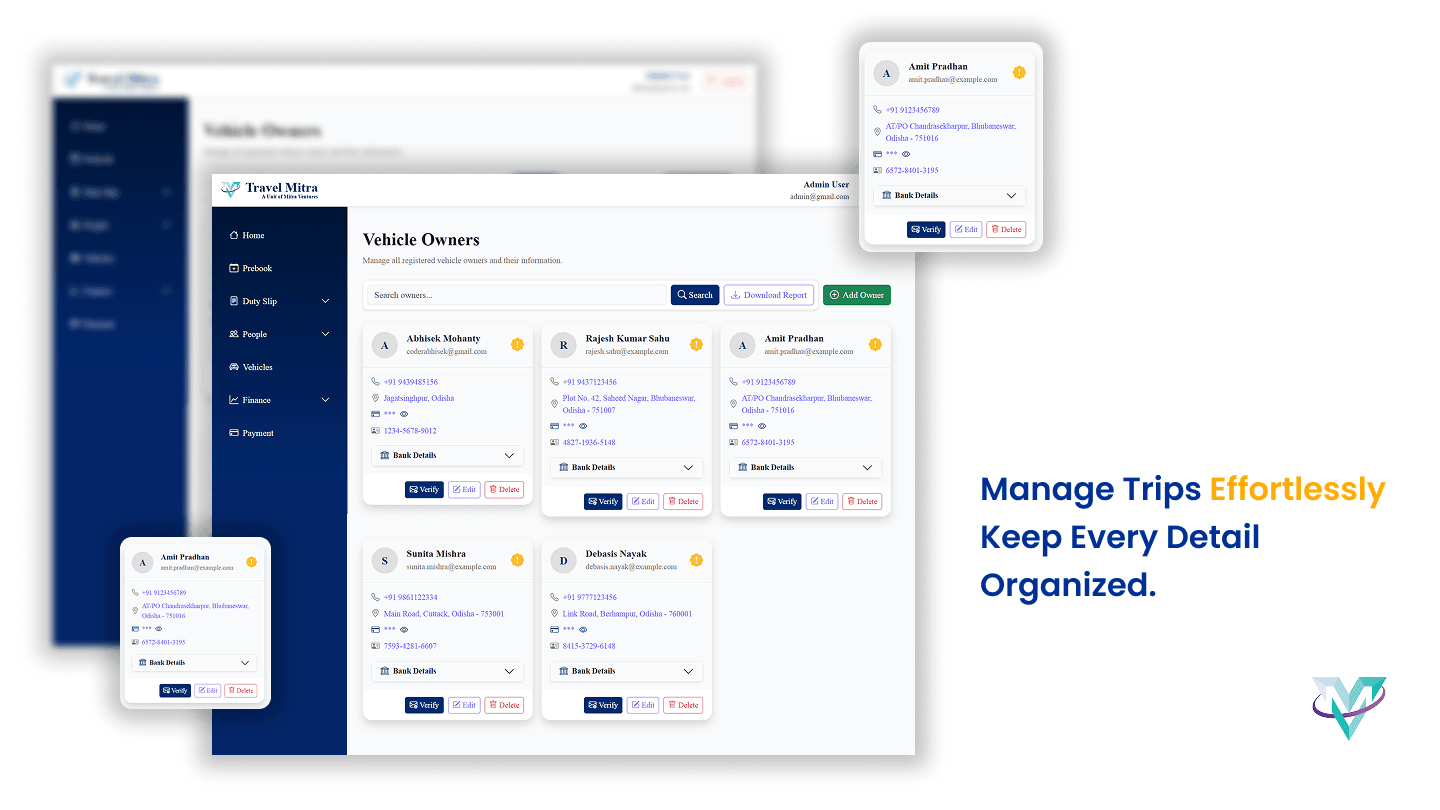
- Owner records bring contact details, banking information, and verification records into the management system. Keeping these details alongside the associated vehicle information makes owner records easier to access and helps support clearer financial settlements.
- How does the system handle driver assignments and upcoming trips?
- Drivers are linked directly to vehicle records, helping staff identify the driver associated with a vehicle when assignments change. The pre-booking feature records upcoming trips in advance, giving the team a place to organize scheduled travel requirements before the day of the journey.
- What information can a duty slip contain?
- A duty slip brings the key details of a trip into one record, including the vehicle, driver, customer, timings, kilometers, charges, penalties, and tolls. This replaces scattered paper records with structured digital information that staff can access and manage within the application.
- Can the system track fuel expenses and payments alongside trip records?
- Yes. The application includes fuel expense records, spending records, and payment management. These features help the team keep track of what was spent and paid, connecting operational activity with the financial information needed for clearer settlements.
- How does the system accommodate different vehicle rates and charges?
- Instead of applying one standard rate to every vehicle, the system supports vehicle-specific pricing. Depending on the arrangement, this can include per-kilometer charges, daily rent, night-halt fees, base prices, overtime rates, lubricant costs, and other applicable charges.
- What reports can be generated from the system?
- The project includes multiple report formats for different operational needs, including monthly vehicle reports, duty-slip documents, and reports covering vehicle usage, expenses, fuel, and payable amounts. These formats help present operational and financial records in a more structured form.
- Why was a web application chosen instead of a desktop application?
- A web application allows the team to access the system through a browser across devices while using a single server. This approach was selected to keep development and maintenance costs lower. The project accepted trade-offs such as more frequent server requests and less client-side processing because they were suitable for the business's requirements.
- How does the system help Travel Mitra handle more trips?
- By making vehicle, owner, driver, booking, expense, and payment information easier to find and manage, the system reduces time spent chasing records and coordinating details manually. The intended outcome is cleaner owner settlements, better service for customers, and the ability to manage a higher volume of trips without increasing administrative effort at the same rate.
Let's Find The Right Solution For Your Business
Custom website development, web applications, and business systems built with clarity and purpose. Helping businesses plan, design, and build digital solutions around real goals.